About
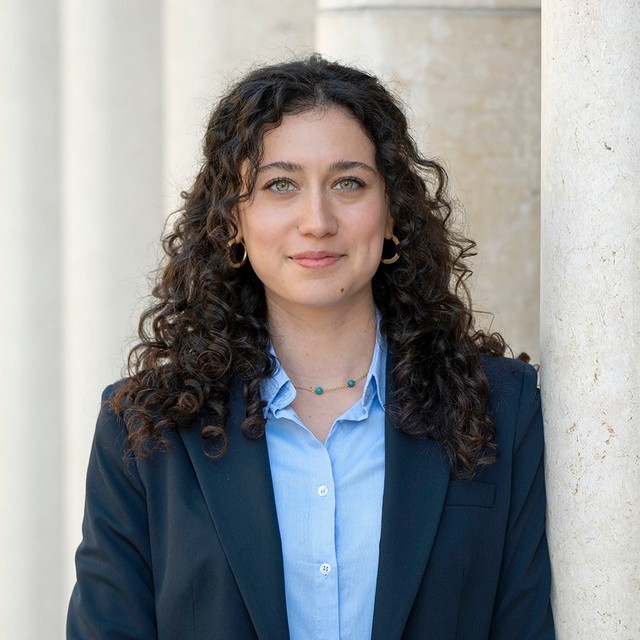
I’m a sixth-year PhD student in Economics at the University of Zurich, supervised by Roberto A. Weber, Katherine B. Coffman and Ana Costa-Ramón. I work at the intersection of behavioral and labor economics, with a focus on career choices and gender inequalities.
I am on the 2026/27 job market.
Interests
Job Market Paper
Making a Difference? The Role of Social Impact in College Major Choice
Presented at: UZH · MIT · Harvard Graduate School of Education · EALE (Universitat de Barcelona) · EER Summer School in Behavioral and Experimental Economics (LUISS, Rome) · IWAEE (Catanzaro) · LEER (KU Leuven) · NCBEE (Hanken School of Economics and Helsinki GSE) · PhD Workshop in Labor and Behavioral Economics (CEBI, University of Copenhagen)
Work is not only a means of earning a living, it can also be a source of meaning through the contribution people feel they make to society. Because the choice of academic major largely shapes future career paths, we ask: do students hold accurate perceptions of how fulfilling different fields are in terms of social impact, and how do these perceptions shape major choices? We address these questions through a survey experiment at a large U.S. public university. We find that students substantially underestimate how satisfied previous graduates report being with their contribution, with significant heterogeneity in the extent of underestimation by field. These beliefs are consistent with stereotyping: students believe that graduates in fields such as Health and Social Sciences are much more likely to be satisfied with their contribution than graduates in Physics & Mathematics or Computer Science, while nationally representative data on college graduates shows the gap is much smaller. We show that randomly providing information on previous graduates' experiences of impact across all fields significantly shifts students' perceptions, with revisions proportional to their initial misperceptions. These revised beliefs lead students who value social contribution to recommend a broader set of majors to like-minded peers. We see more limited effects on students' intentions and class enrollment, with significant changes in intentions only among women, who value social impact most and shift toward fields whose social impact they had underestimated.
Work in Progress
Is Social Learning Gendered?
Data collection complete
We ask whether individuals’ economic decisions are influenced by the average behavior of peers with similar economic characteristics, and whether this response depends on gender: do women respond more strongly to information about other similar women’s choices, and men to information about other similar men’s? To answer these questions, we partner with a microfinance institution in Kenya, a setting with substantial gender gaps in credit demand. We embed an experiment in the institution’s routine loan-application phone call. Applicants are randomly assigned to hear the average amount requested by a random sample of similar past borrowers (same area, age bracket, and sector). Depending on the treatment arm, this sample consists of male borrowers, female borrowers, or borrowers in general, with no gender specified. We estimate the causal effect of each type of information on applicants’ final requested amounts, as well as on the amounts later granted and repaid. Preliminary results show that information about the amount others requested shifts credit demand and that, conditional on the amount communicated, both women and men respond more strongly to information about peers of their own gender.
How Men and Women Want to Do (and Look) Good: Effective Altruism vs Warm Glow
Piloting
When monetary donations yield the same or even higher social outcome than working directly for the cause, which way of making an impact do people choose, and why? A reason they may not be indifferent is warm glow: the satisfaction of contributing in person, beyond the impact produced. Another is social image, if helping directly signals prosociality in a way that donating does not. Both may operate differently for women, who report stronger preferences for meaningful work and are more often expected to be prosocial. In this experiment, participants choose between two hypothetical jobs: assembling and delivering meals to people in need themselves, or working for pay and donating part or all of the wage to the same non-profit. Using a multiple price list, I vary in the second option the number of meals the donation funds and the private earnings retained, and estimate how these trade-offs differ by gender. To separate warm glow from social image, I randomise whether choices are shown to a sample of spectators, who predict what a man or a woman participant chose and then judge how much that person cares about helping others.
Infidelity and Marital Resource Allocation
Piloting
Infidelity is widespread in Sub-Saharan Africa, especially among men. We study the relationship between infidelity and resource allocation between spouses: when wives expect their husbands to be unfaithful, do they share less of their resources with their husbands, or more? And does the prospect of wives gaining control over resources affect husbands' infidelity? We investigate these questions in three experiments in Dar es Salaam, Tanzania. First, we use a list experiment to measure the prevalence of infidelity in local communities. Second, we run an experiment with wives, where we provide randomized information about local infidelity rates and let them choose how to split a one-year income subsidy between themselves and their husbands. Third, we run an experiment with husbands, where we inform a random sample that their wife may receive an income subsidy of varying size in the future. Six months later, we measure their infidelity through private reports from their wives.
University of Zurich
Lecturer The Economics of Gender Norms, BA (2024)
Teaching Assistant Econometrics for Research Students, PhD (2023–2024)
Bocconi University
Teaching Assistant IT Education Center, BA (2016–2020)
I am an Alumna of the Think-Tank Tortuga. Tortuga is an Italian think-tank of Economics students and young researchers. We publish articles on economic issues of current relevance, with particular attention to their policy implications. We collaborate with institutions and political parties in projects of policy drafting and economic analysis.